In short: An immersive 3D website uses real-time 3D, motion and scroll-driven storytelling so people experience what you sell instead of only reading about it. It pays off when the product is visual, high-value or hard to explain in photos: luxury real estate, yachts, hospitality, architecture and premium products. Built well, it still loads fast and stays readable by Google and AI.
The short answer
An immersive 3D website is a website where the visitor moves through the experience. Instead of a page of photos and paragraphs, they turn a product in 3D, walk through a residence, open a floor of a building, or scroll through a story that plays like a short film. The technology behind it is usually WebGL (often with the three.js library), combined with scroll animation and regular, search-friendly HTML.
What makes a website "immersive"
- Real-time 3D: objects, spaces or products the visitor can rotate, zoom and explore.
- Cinematic scroll: each section moves like a scene, so the page tells a story in order.
- Interaction with purpose: choosing a floor, a finish or a cabin, not effects for their own sake.
- A clear next step: an inquiry, a booking or a call, one tap away on every screen.
Examples you can picture
| Business | What the 3D experience does |
|---|---|
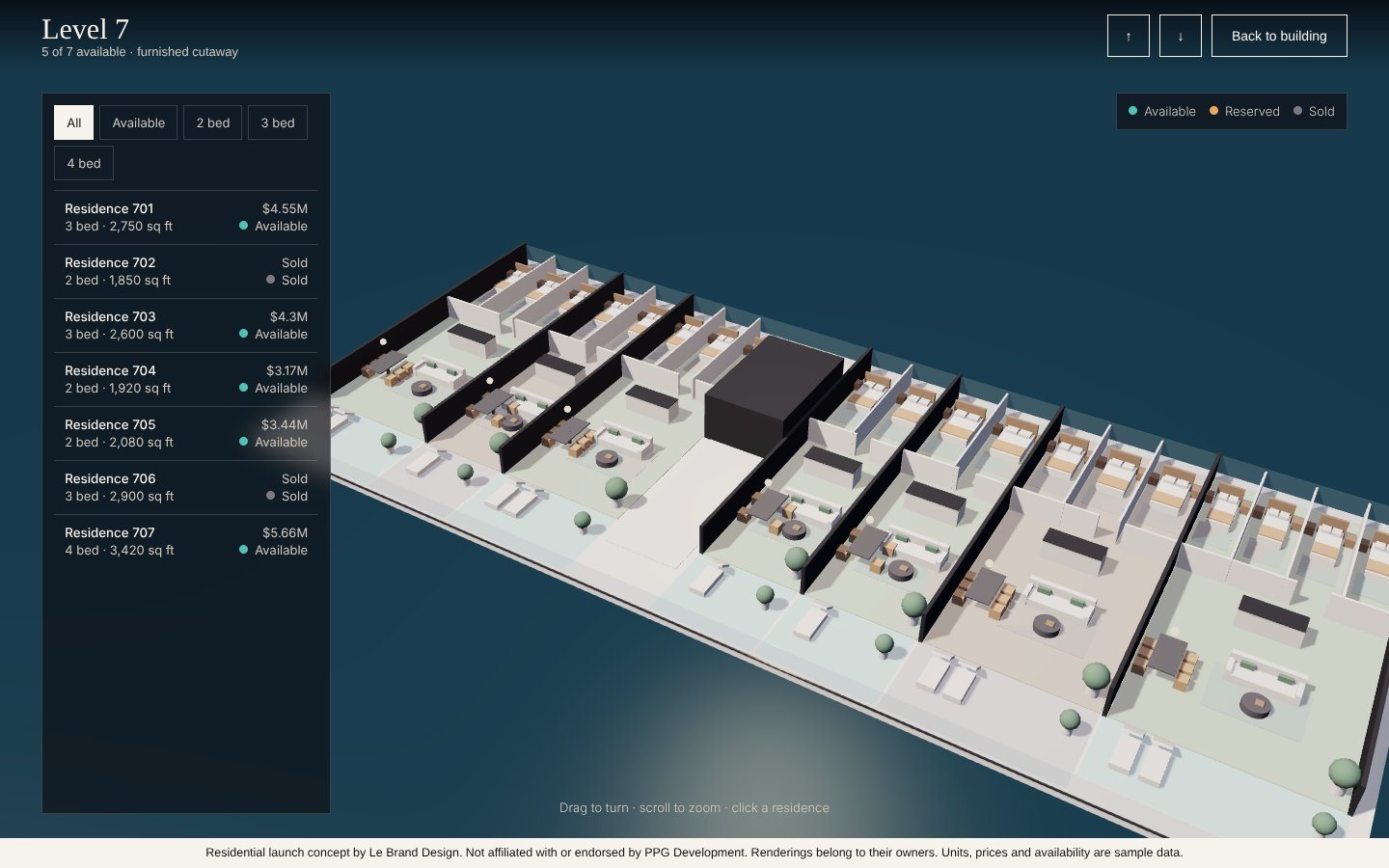
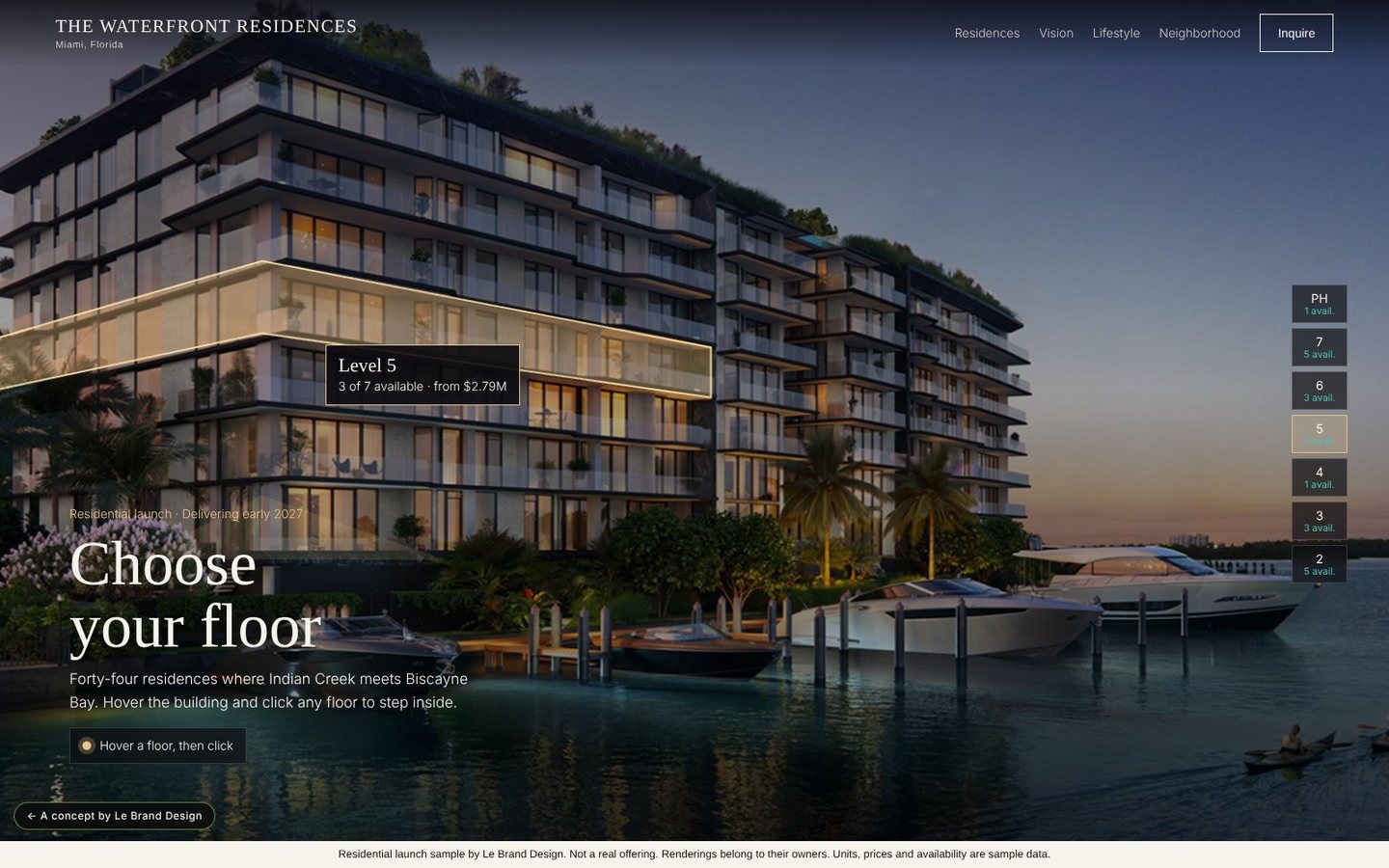
| Luxury real estate developer | Buyers hover the building, pick a floor and open a furnished 3D view of each residence with live availability. |
| Yacht builder or charter | Visitors explore deck by deck and switch layouts or interiors. |
| Hotel or branded residence | A cinematic arrival sequence, then suites and amenities to explore before booking. |
| Architect or interior designer | Projects presented as spaces to walk through, not flat portfolios. |
| Premium product brand | A 3D configurator for colors, materials and options. |
You can try a working example: our 3D residential launch sample lets you choose a floor on the building and open it in 3D.
When is it worth it?
A 3D website is worth it when at least two of these are true:
- What you sell is high-value, so a better experience changes a big decision.
- It is visual or spatial, and photos do not show it well (a floor plan, a layout, a material).
- It does not exist yet, like a pre-construction building or a custom product.
- Your market is crowded, and looking like everyone else costs you attention.
If none of these apply, a fast, well-written standard website with strong SEO and AEO will usually do more for you. We say so when that is the case.
Does it work on phones and for SEO?
It should. A good build serves a lighter version on phones, respects reduced-motion settings, and keeps every important word in the page as real text, so Google and AI assistants can read and quote it. We cover this in detail in Do 3D websites hurt SEO?
How a 3D website project runs
Every project starts with our ALIGN™ method: we define the buyer, the story and the one moment that should stay with people, then design, build the 3D, write the content and optimize it for search and AI. Projects run remotely, so we work with clients across the United States and internationally.
Frequently asked questions
What is an immersive 3D website?
An immersive 3D website uses real-time 3D, motion and scroll-driven storytelling so visitors explore a product, place or brand instead of only reading about it, for example walking through a residence or turning a product in 3D.
What technology are 3D websites built with?
Most use WebGL in the browser, often with the three.js library, combined with scroll animation and standard HTML so the text stays readable by search engines and AI assistants.
Who needs an immersive 3D website?
Businesses selling high-value, visual or not-yet-built products benefit most: luxury real estate developers, yacht builders and charters, hotels, architects, interior designers and premium product brands.
Are 3D websites slow?
They do not have to be. Compressed 3D models, lazy loading and a lighter mobile version keep pages fast. Speed is planned from the start, not fixed at the end.